How to Recover SEO Traffic After Google AI Overviews and Core Updates: A Webflow-Friendly Playbook for 2026
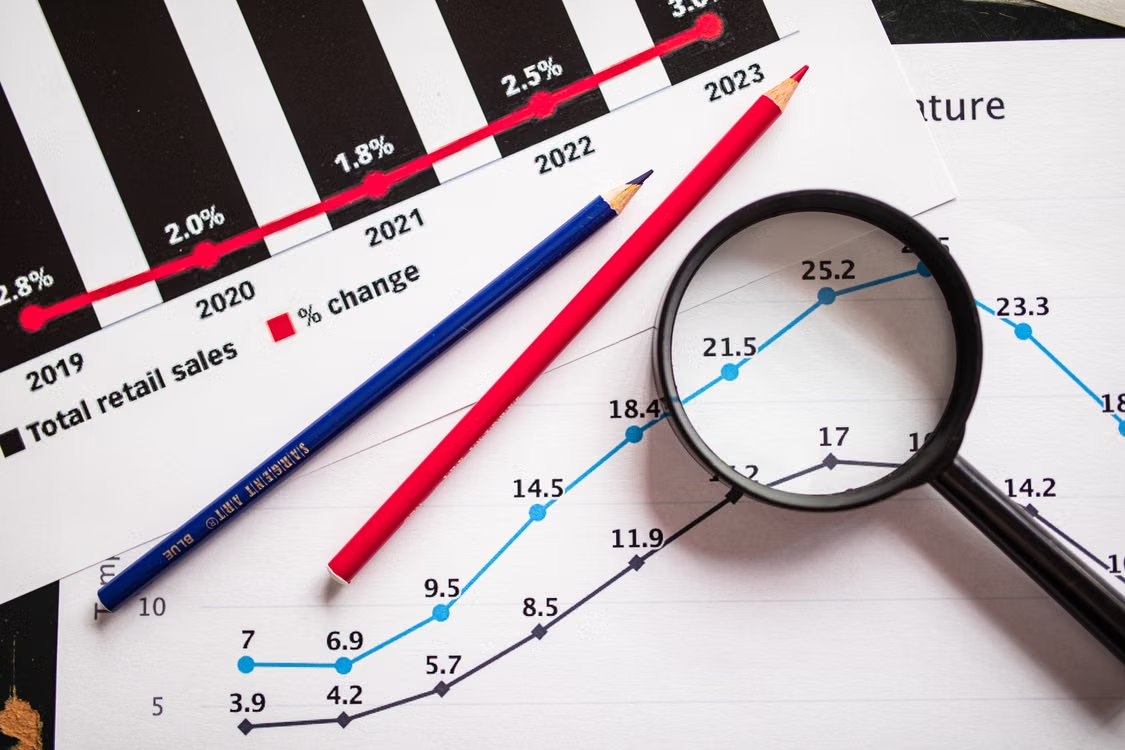
If your traffic chart has been sliding through 2026, you're dealing with one of two problems, or both at once: a core update re-rated your content, or AI Overviews are answering queries before anyone reaches your site at all. They feel identical from the outside — a downward line in Search Console — but they need different diagnoses and different fixes. This playbook walks through both, with specific steps for teams building on Webflow.
Why did traffic and rankings drop?
The most important thing to understand about 2026 is that ranking well and getting clicked are no longer the same thing. Seer Interactive's analysis of 5.47 million queries across 53 brands found organic click-through rate dropping from 1.76% to 0.61% on queries where an AI Overview appears — a 61% relative decline — and a separate randomized field study from the Indian School of Business and Carnegie Mellon measured a 38% organic click reduction specifically attributable to AI Overviews triggering. Roughly 60% of Google searches now end with no click to any website at all, and when an AI Overview specifically appears, that zero-click rate climbs to around 80–83%. In Google's AI Mode, it's higher still.
This implies that the page is at position one but loses almost all of its traffic, as the AI Overview comes before the organic listings and takes care of the query even before the users get to scroll further. This is the main area of misunderstanding that causes panic among many people asking why their traffic dropped in 2026, when the truth is that there was no change in the ranking, which caused the drop in the click through rate.
Step One: Diagnosing the Problem Before Taking Any Action
There are three different causes for the decrease in the line seen in the analytics, and each has to be handled in its own way:
- AI Overview / zero-click expansion — rankings hold, clicks fall.
- A core update re-rating your content — rankings themselves drop.
- An actual on-site or technical regression — something broke, independent of any Google update.
To tell them apart, start in Search Console:
- Flat rankings, decreased clicks and CTRs → this suggests AI Overview replacement. Filter the Performance report to identify queries that saw stable rankings, but reduced clicks and see if these queries specifically now trigger the AI Overview.
- The rankings have decreased by themselves, not clicks → this suggests that a core update is responsible. Compare performance data from right before and right after the rollout to ensure timing matches.
- Decrease seen only on particular pages or a certain day without any update/AI Overview correlation → look at the technical issues first: broken redirects, robots.txt update, Core Web Vitals degradation, or the deployment itself.
Don't skip this step. Applying an AI-visibility fix to a core-update problem, or a content-quality overhaul to a zero-click problem, wastes weeks and can make the real issue harder to isolate later.
Step 2: Recovering from a Core Update

If your rankings genuinely dropped — not just your clicks — the fix is a content quality and trust problem, not a technical one.
Step 3: Audit honestly, page by page.
Identify content that adds nothing a reader couldn't get from a dozen other sources, and either substantially improve it or remove it. A pile of thin pages can drag down your strongest ones site-wide, since Google's quality assessment increasingly looks at a site's overall pattern, not just the one page in question.
Step 4: Add genuine first-hand signals.
Your own results, your process, your specific point of view — not a polished restatement of common knowledge. This is the "Experience" component of EEAT, and it's the piece of thin or purely AI-generated content that struggles hardest to fake.
Step 5: Tweak Author Rank and Trust Indicators.
Authors who have credentials, clear sources, and valid and current information on the page. Focus on the important pages first. Work on those that had high traffic before the drop rather than fixing the entire website all at once.
Be patient. Core update recovery may come in the following update cycle as opposed to right after your changes, since this is algorithmic and not manual review where you can submit an appeal.
Step 6: Recovering from AI overview displacement
This is the newer problem, and it needs a genuinely different strategy: you're not fighting to win back a click that Google is now resolving on the results page. You're fighting to become the source the AI Overview cites — and increasingly, to be visible inside AI Mode, ChatGPT, Perplexity, and other answer engines that route traffic upstream of the traditional search results altogether.
Step 7: Restructure content for extractability.
AI systems pull directly quotable, clearly structured answers. Put a direct, complete answer to the core question in the first two or three sentences under each heading, before adding nuance or context. Use genuine question-and-answer formatting for FAQ-style content, short definitive sentences for definitions, and numbered steps for processes — the structures AI systems can lift cleanly rather than paraphrase from a wall of text.
Step 8: Strengthen the trust signals AI systems weigh.
Named authorship, clear sourcing for any statistic or claim, and content that demonstrates direct experience all improve how likely a page is to be trusted and cited. This overlaps heavily with core-update recovery work — the same signals that help with one help with the other, which is useful if you're dealing with both at once.
Step 9: Make use of structured data correctly.
Structured data is one of the most straightforward indicators used by AI-powered search engines to understand the content. The pages with rich results have higher click-through rates not only in the AI Overviews category but also in general, as they contain more structured data than others.
Focus on comparison and decision-making searches. The data from 2026 clearly indicates that comparison, decision-making, and citation-earning content retains and even gains its traffic while purely informative queries become less popular due to summaries generated by AI systems. It is one of the most effective strategies for overcoming the decline of traffic from informational queries if you have a heavy reliance on explainers at the top of the funnel.
Step 10: Track AI citations directly, not just rankings.
Traditional rank tracking won't show whether you're actually appearing inside AI Overviews or being cited by other AI engines. The overlap between top-10 rankings and AI Overview citation has become far less reliable than it used to be — some 2026 analysis has found that overlap collapsing sharply from where it stood in mid-2025. Set up a recurring process — manual or tool-based — of running your priority queries and logging whether you're mentioned, cited, or absent from the AI-generated answer.
Redefine your success criteria. Sessions and ranks simply aren't enough to gauge the true performance of brands succeeding in AI searches anymore. Click quality, citation percentage, and conversions per session are the criteria that matter in 2026 – and it all comes with a benefit, since traffic from AI referrals convert significantly better than regular organic traffic due to their knowledge of what they need.
The Webflow-specific playbook
Everything above applies regardless of platform. These steps are specific to executing it well on Webflow.
Use CMS templates to scale structured, extractable content consistently: Webflow's Collection Template pages let you build a consistent content structure once — a direct-answer block near the top, a clear heading hierarchy, an FAQ section — and have it apply across every blog post or service page in that collection automatically. That consistency matters more for AI extractability than it does for traditional SEO, because AI systems reward predictable, well-labeled structure.
Add schema via CMS-bound Embed blocks, and keep it consistent: Since Webflow has no native schema plugin, build your JSON-LD once on the Collection Template page and bind it to plain-text CMS fields — not Rich Text fields, which can break the JSON structure. Doing this at the template level, rather than page by page, is what makes schema maintainable at scale on Webflow specifically.
Check your Global Canonical Tag setting before making content changes: If you're restructuring pages for recovery, confirm your canonical URLs are still correct first — a content overhaul built on top of a canonical mismatch just recovers the wrong URL.
Use Webflow's native SEO fields deliberately, not by default: Update title tags and meta descriptions to reflect the direct-answer restructuring you're doing, rather than leaving them as they were before the update or AI Overview shift. These fields are template-level in Webflow, so a change here can apply consistently across an entire content type in one edit.
Rebuild underperforming pages inside their existing template, not as one-offs: If you're improving EEAT and extractability on a set of pages, do it in a way that keeps the whole Collection consistent, rather than hand-editing individual pages outside the template structure. Inconsistent structure across a Collection is one of the more common ways Webflow sites undermine an otherwise sound recovery effort.
Validate schema and page structure on the live, published URL: Webflow's Designer preview can render bound fields differently than the published page. Check your actual JSON-LD and heading structure with Google's Rich Results Test after publishing, not before.
What recovery actually looks like
Recovery from both takes time and progresses differently from one another. Recovery from core Google update, on the other hand, usually occurs in the next cycle of the update following improvements in quality. Recovery from AI Overview, becoming an eligible citation source, may be observed sooner since it does not hinge upon a regular algorithm rollout like core ranking but rather on how much restructuring was done in order for the content to become extractable.
Take note of the following in the coming months: the stability and improvement of rankings from affected searches, appearance of your site in the AI Overviews of searches wherein it did not appear before, and improvement of your conversion rate even with less sessions.
Conclusion
The traffic dip in 2026 is typically not just one thing but, rather, the combination of a core update upping the quality ante, AI Overviews capturing the click regardless of the ranking, and sometimes even a technical issue lurking under both. Figure out which of those three is really what you're dealing with before making any changes, then handle core update recovery as a content trust issue and AI Overviews recovery as an extractability and citation issue — each a separate discipline, but with much common ground. For Webflow, doing this kind of work at the template level rather than on a per-page basis is how it sustains itself.
Want a clear diagnosis before you rebuild anything?
We'll pull your Search Console and analytics data, separate what's a core-update issue from what's AI Overview displacement, and build the specific Webflow-level fix for each — template structure, schema, and content — rather than a generic traffic-recovery checklist.
Book a Free SEO Recovery Audit →
We'll show you exactly what's driving the drop before recommending anything.