Which Shopify Plus Features Are Actually Worth Paying For?

However, as the ecommerce venture expands, the platform that seemed to fit like a glove when starting out could show some cracks. The increasing orders, entry into the international market, dealing with wholesalers, and improvements on the checkout process may be difficult to handle.
This is where Shopify Plus comes in.
Shopify Plus caters to high-growth enterprises and high-growth businesses through its unique set of features beyond those available in the basic Shopify packages. Some of these features include checkout customization, B2B capabilities, expansion stores, automation, APIs, and many more.
However, upgrading to Shopify Plus isn't automatically the right decision for every growing online store. With a significantly higher subscription cost, businesses need to understand which features offer genuine operational or commercial value.
So, which Shopify Plus features are actually worth paying for?
Let's explore the capabilities that can make a difference, the businesses most likely to benefit from them, and what you should consider before upgrading.
1. Advanced Checkout Customization
Your checkout experience plays an important role in ecommerce conversions. Even when customers are interested in your products, unnecessary steps, limited payment options, or an inconvenient checkout process can create friction.
Shopify Plus offers further capabilities regarding checkout customization allowing businesses to implement checkout experiences that meet their brand requirements.
Such capabilities include access to the Checkout Branding API, Shopify Extensions, and further customization possibilities offered by compatible applications and tools.
Businesses will be able to create checkout experiences that meet their needs, including customized looks and purchasing requirements.
For instance, an ecommerce company with a large number of orders would like to have additional functionality at the checkout, while a company selling its goods to wholesalers and retailers may require different checkouts for different customer segments.
Why Is It Worth Paying For?
Checkout customization becomes particularly valuable when a business has specific requirements that standard checkout settings cannot adequately support.
It can help businesses:
- Create a more consistent branded experience.
- Introduce customized checkout functionality.
- Support different B2B and D2C purchasing journeys.
- Configure additional shipping and discount logic.
- Improve the overall checkout experience.
However, customization alone doesn't guarantee higher conversions. It should address an actual customer or operational problem.
2. Built-In B2B Ecommerce Capabilities
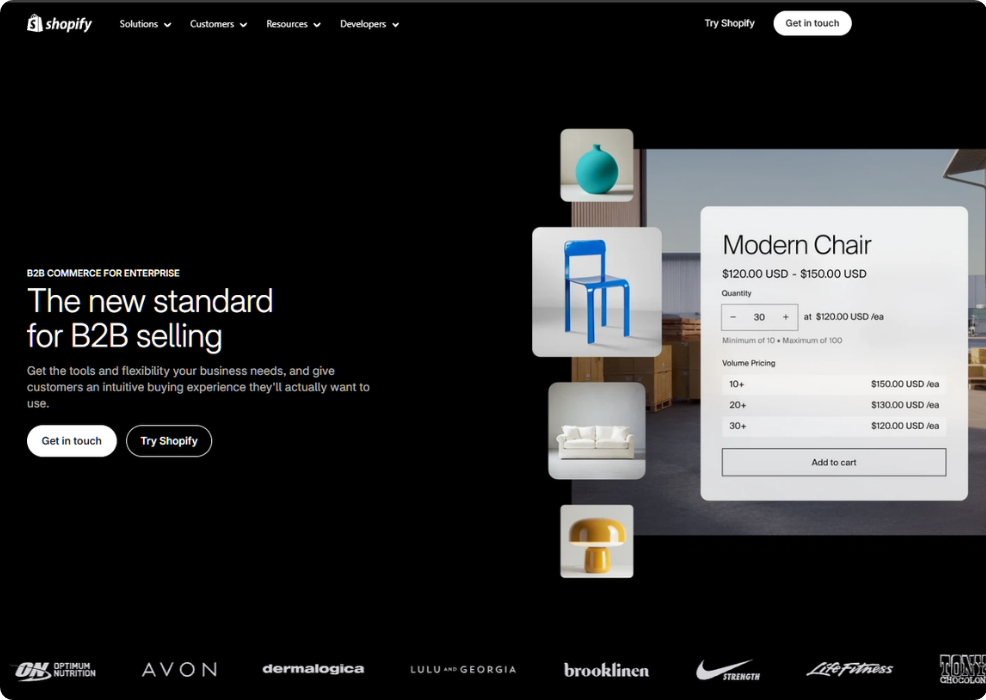
One of the most useful Shopify Plus capabilities for wholesale businesses is its advanced B2B functionality.
Ecommerce checkout is not always enough when there is a B2B relationship between companies buying from distributors, retailers, wholesalers, or other firms. Sometimes additional options are required such as individual prices, tailored catalogues of products, order quantities, payment terms, etc.
Shopify offers B2B features across several plans, but Shopify Plus provides additional capabilities.
These include:
- Unlimited B2B catalog assignments.
- Direct catalog assignment to specific companies and company locations.
- Deposit requirements.
- Partial payments.
- Payment requests per fulfillment.
- Separate B2B and D2C checkout experiences.
For instance, a product manufacturer that sells goods to several distributors requires separate pricing for each business buyer.
With Shopify Plus, companies can handle customer-based cataloging and more complex payment systems through their e-commerce operations.
Why Is It Worth Paying For?
If wholesale sales represent a significant part of your revenue, these capabilities can reduce manual processes and simplify business purchasing.
Instead of managing different pricing arrangements and orders through disconnected systems, businesses can create a more organized purchasing experience.
For companies operating both wholesale and direct-to-consumer channels, this can be a particularly valuable reason to consider Shopify Plus.
3. Expansion Stores for Multiple Markets and Operations
Operating in many countries or having more than one storefront might create further management issues.
Localized information, different product lines, separate storefront experience, or separate store configurations are some of the possibilities that you might require.
Under the Shopify Plus subscription model, there is an allowance of nine expansion stores in the Plus plan. This can be used to extend to other countries or to manage separate storefronts.
For instance, an apparel company venturing into different geographical regions may require different storefront experiences depending on the location.
Why Is It Worth Paying For?
Expansion stores can help businesses manage more complex selling operations without having to build an entirely disconnected ecommerce setup for every market.
They can be useful for:
- International ecommerce expansion.
- Separate regional storefronts.
- Different business operations.
- Managing localized shopping experiences.
- Supporting multiple storefront requirements.
However, expansion stores aren't automatically necessary for every international business. Shopify Markets also supports selling across multiple countries and regions from a single store.
Evaluate whether you actually need separate stores or whether a single localized storefront can meet your requirements.
4. Shopify Flow and Advanced Automation
As order volumes increase, managing everyday ecommerce tasks manually becomes increasingly difficult.
From processing orders and updating inventory to organizing customer information and managing internal notifications, repetitive tasks can consume valuable time.
Shopify Flow helps businesses automate workflows using triggers, conditions, and actions.
For example, an ecommerce business could create workflows to:
- Tag customers based on purchasing behavior.
- Notify teams when specific inventory conditions occur.
- Flag orders that require additional review.
- Organize customers based on relevant order activity.
- Trigger internal notifications for important events.
Shopify Flow is also available on several non-Plus Shopify plans, so it isn't exclusively a Shopify Plus feature.
However, Plus merchants can benefit from using automation as part of a more advanced ecommerce setup, particularly when combined with custom integrations and complex workflows.
Why Is It Worth Paying For?
Automation is important once there is a significant impact on productivity, order handling or customer experience.
Instead of employing more people to undertake all manual tasks, businesses could automate the processes that fit well within their organization and enable them to concentrate on doing other things.
What matters here is recognizing the time-consuming processes and assessing if automation can deal with them.
5. Advanced API Access and Custom Integrations
Growing ecommerce businesses often rely on multiple systems to manage different parts of their operations.
These may include:
- Enterprise Resource Planning (ERP) software.
- Customer Relationship Management (CRM) platforms.
- Inventory management systems.
- Accounting software.
- Warehouse management solutions.
- Marketing automation platforms.
Shopify Plus has more resources and greater API capacity than those provided by regular plans.
Shopify Plus also has support for Shopify Functions that can help develop customized commerce logic using apps.
This gives businesses more flexibility when connecting Shopify with external systems or developing specialized functionality.
For example, a business with complex inventory operations may need its ecommerce store to communicate with an external inventory management platform.
A custom integration can help synchronize relevant information and reduce manual data entry.
Why Is It Worth Paying For?
Advanced API capabilities are particularly valuable for businesses with complex technology requirements.
They can help:
- Connect multiple business applications.
- Support customized operational workflows.
- Synchronize business information.
- Develop specialized commerce functionality.
- Extend the capabilities of an existing ecommerce setup.
Nevertheless, API usage does not remove the need to pay for development. Integration will still need to be planned, implemented, tested, and maintained.
When your shop requires just a few standard apps, then it’s likely that new features won’t be worth the upgrade.
6. Headless Commerce for Greater Storefront Flexibility

For businesses with advanced design and development requirements, Shopify Plus supports headless commerce.
In a traditional Shopify store, the storefront and commerce functionality operate within Shopify's connected platform.
With headless commerce, the frontend experience can be developed separately while Shopify continues to manage commerce functionality through its APIs.
Shopify supports Hydrogen, its React-based framework for building custom storefronts, and Oxygen for hosting Hydrogen storefronts.
This approach provides greater flexibility over how products, content, and shopping experiences are presented.
For example, a large consumer brand may want to build a highly customized shopping experience with interactive product displays, personalized content, and unique navigation.
Headless commerce can provide the development flexibility needed for such requirements.
Why Is It Worth Paying For?
Headless commerce may be valuable for businesses that:
- Need highly customized storefront experiences.
- Have dedicated development resources.
- Operate across multiple digital touchpoints.
- Require greater frontend flexibility.
- Have complex content and commerce requirements.
However, headless commerce isn't automatically faster, cheaper, or better than a traditional Shopify storefront.
It introduces additional development and maintenance responsibilities. Businesses should evaluate whether the flexibility is worth the added complexity.
7. Advanced Reporting and Business Insights
As an ecommerce business grows, understanding performance becomes more important.
Basic sales reports may not provide enough information to evaluate customer behavior, inventory performance, purchasing patterns, and business growth across multiple stores.
Shopify Plus provides access to additional reporting and analytics capabilities, including advanced sales, customer, inventory, and cohort reporting.
These insights can help businesses understand:
- Which products contribute most to revenue.
- How customer purchasing behavior changes.
- Which customer segments are valuable.
- How inventory performs across locations.
- How sales differ across stores.
- Where operational improvements may be needed.
Businesses can use these insights to make more informed decisions about inventory planning, customer retention, and marketing investments.
Why Is It Worth Paying For?
Advanced reports become more useful when there is sufficient operational data available for effective analysis.
For instance, an ecommerce store with many customers can utilize information related to their cohorts to comprehend their purchase patterns and work on retaining them.
If your business is largely dependent on reporting, and if you have multiple stores or complicated processes, this additional feature may come in handy.
8. Unlimited Staff Accounts and Better Store Management
In managing an expanding ecommerce firm, there might be several departments involved as well as multiple individuals in your firm.
While the marketing department may require access to the campaign and customer data, operations would handle orders, inventory, and delivery.
There is unlimited staffing in Shopify Plus, and you can also create custom user groups within the Shopify Plus plan.
It can make the access management easy for your business without having to worry about staff limit.
For instance, your business may have different departments, including marketing, customer service, finance, and operations.
Why Is It Worth Paying For?
This feature is useful for businesses with expanding teams, multiple departments, or more complex administrative requirements.
It can simplify user management and make it easier to organize responsibilities as the business grows.
Smaller businesses with only a few people managing their stores may not see the same value.
9. Launchpad and High-Volume Sales Management
Promotions, product launches, seasonality, and flash sales can cause immense operational stress.
The organization needs to align their promotions, product offering, marketing campaign, and updates on the storefront without compromising the customer experience.
There is provision to use dedicated apps and channels like Shopify Plus Launchpad to automate the promotions.
It will be useful to the organization in terms of aligning certain strategies of promotion for sales events.
Fashion store releasing the new seasonal collection will require promotion strategy alignment and updating of the store.
Why Is It Worth Paying For?
For businesses that regularly run large campaigns, coordinated promotional management can reduce manual work and improve operational planning.
However, businesses should evaluate the current availability and functionality of the relevant tools before making an upgrade decision.
Which Shopify Plus Features Are Worth the Investment?
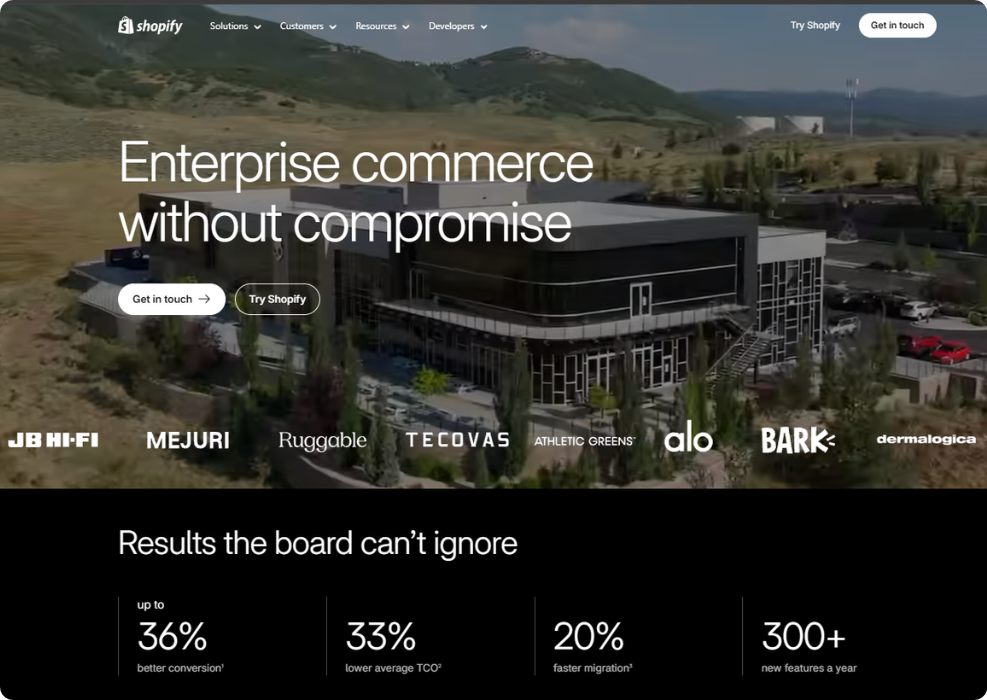
Not every feature delivers the same value to every ecommerce business.
The following table summarizes where the major capabilities may be most useful.
The best investment depends on how frequently you will use a feature and how much time, money, or operational complexity it can help reduce.
Is Shopify Plus Worth the Price?
Shopify Plus is a high-end version of Shopify, and it is more expensive than other Shopify products to subscribe to.
According to Shopify pricing, Shopify Plus costs $2,500 USD per month if you subscribe on a one-year term or $2,300 USD per month on a three-year term for regular configurations and integrations. The price depends on the currency and terms of subscription. Currently, the cost of Shopify Plus in India is listed as ₹190,000 per month for a one-year term and ₹175,000 per month for a three-year term.
Some complex, higher-volume businesses may be subject to variable platform fees. Additional expenses can include custom development, third-party applications, and theme purchases.
Before upgrading, consider the following:
- Current sources of income and growth for your business: Does your business need the scale and complexity to take advantage of advanced ecommerce features?
- Current limitations: Is your business having difficulties with wholesale, checkout customization, running multiple stores, or integration?
- Expected benefit: Can this added functionality save you money, be more efficient, or generate more income?
- Development requirements: Do you require the assistance of developers or third parties to add any custom functionality?
- Current Shopify plan: Could your requirements be met by using the Shopify Advanced plan or other available plans?
Usually, the Shopify Plus plan should be evaluated only if your business needs functionality that cannot be achieved efficiently on other available plans.
Final Thoughts
What Shopify Plus provides is not just an upgraded subscription plan. The reason why this service adds value is because of the features it allows to handle ecommerce needs.
Features such as advanced checkout customization, B2B selling, expansion stores, API access, and advanced reporting can make a meaningful difference for businesses operating at scale.
But all businesses don’t need all these features.
At 253 Media, we help ecommerce businesses build, optimize, and scale their online stores with strategies focused on performance, user experience, and business growth.
Whether you are looking to upgrade to Shopify Plus, migrate a store, enhance your checkout process, or implement sophisticated e-commerce applications, our team is here to help you understand your needs and the appropriate strategy.
From Shopify development and customization to SEO, conversion optimization, and ecommerce strategy, we focus on creating solutions that support your business goals.
The smartest Shopify Plus investment isn't about accessing more features. It's about paying for the capabilities that solve real business problems and support sustainable growth.