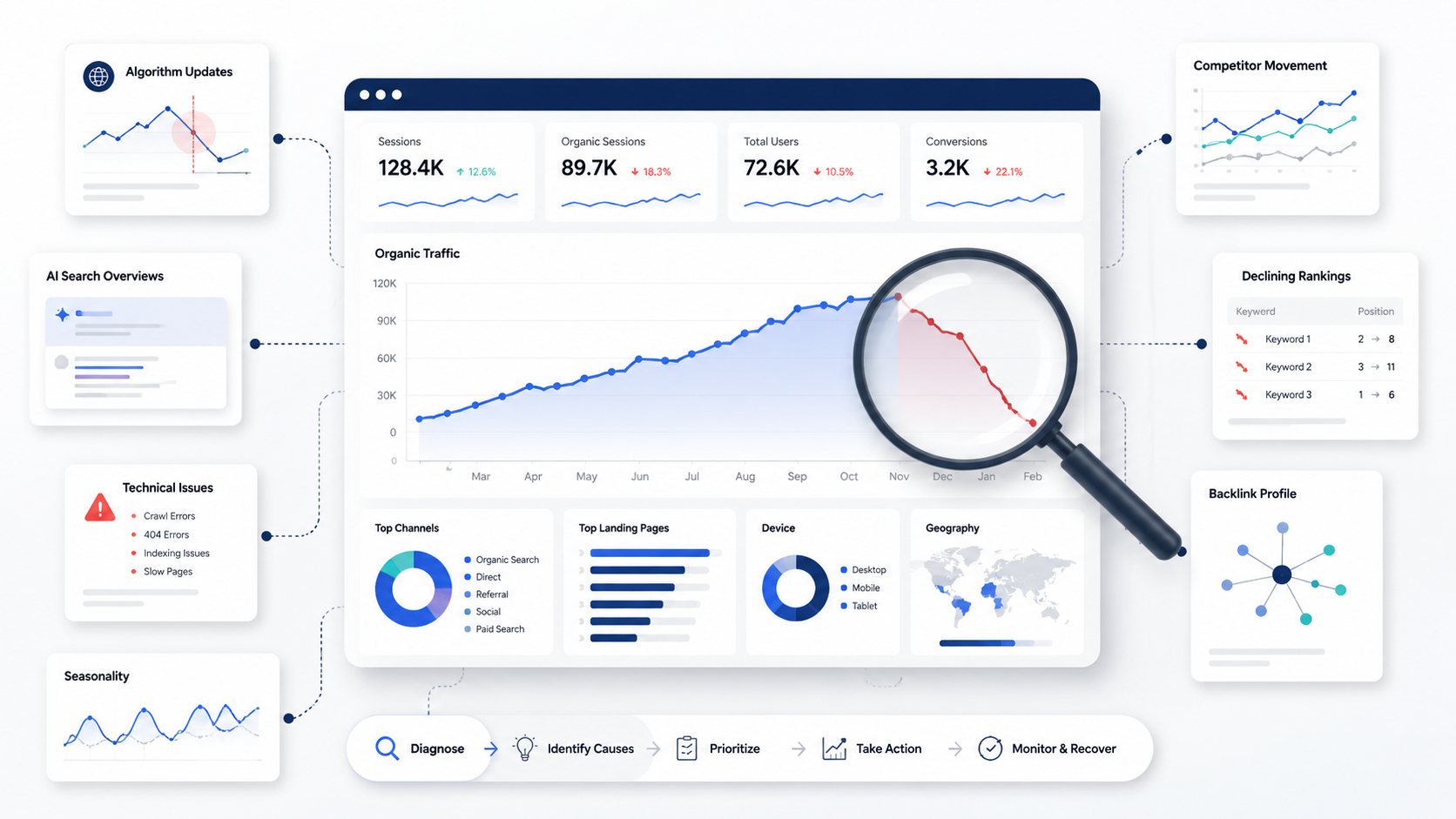
How to Optimize Webflow Content for AI Overviews: What Actually Improves Visibility Beyond Technical SEO
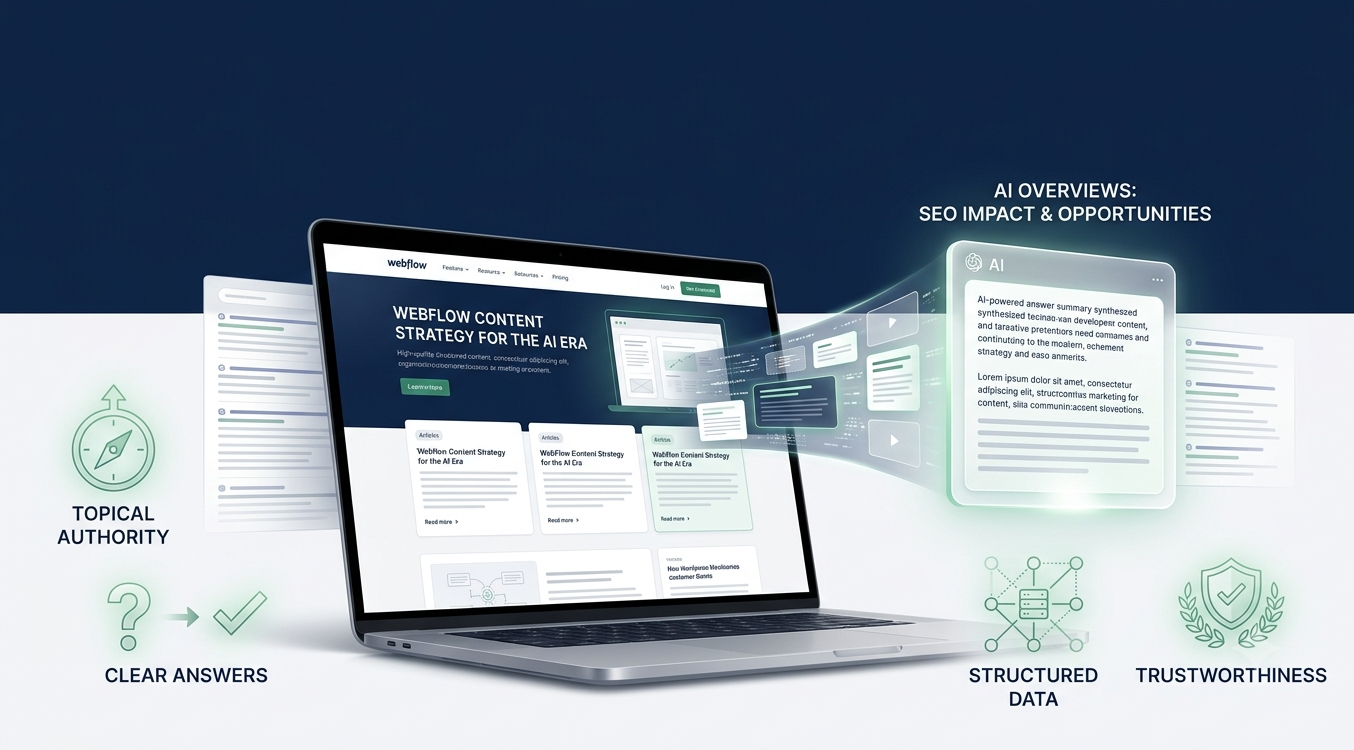
If your Webflow site ranks well but still isn’t showing up in AI-generated answers, you’re not alone. Search is moving at a rapid pace, and what you did last year is not enough this year. In addition to technical optimization, it's essential to have clear, original, and useful content to earn visibility in AI Overviews.
In this guide, we’ll break down what actually drives AI visibility beyond the basics and show you how to create Webflow content that earns trust from both search engines and AI, so you can capture more leads and revenue.
Why AI Overviews Have Changed SEO
For years, SEO success meant ranking on the first page of Google. The higher your page ranks, the more clicks you can expect.
AI Overviews have changed that journey.
Instead of showing users a list of links, Google now generates summaries by pulling information from multiple trusted sources. That means your content isn’t just competing for rankings anymore—it’s competing to become one of the sources AI chooses to reference.
This shift changes how content is evaluated. Keywords and technical optimization still matter, but AI also looks for:
- Clear answers to user questions
- Original insights and expertise
- Well-structured information
- Topical authority
- Trustworthy, accurate content
For Webflow sites, this shift is a real opportunity. Webflow gives you a solid technical SEO base out of the box. The real growth comes when you combine that with content that answers your customers’ questions better than your competitors do. That’s how you drive more qualified traffic and conversions.
Technical SEO Is the Foundation — Not the Advantage
Technical SEO is still essential. Your website needs to be crawlable, fast, mobile-friendly, and properly structured. Without those basics, search engines may struggle to understand your content.
But technical SEO alone won’t set you apart or drive new business.
Plenty of sites have optimized metadata, clean URLs, schema, and strong Core Web Vitals. But if your content doesn’t bring anything new to the table, you’ll still miss out on AI-based visibility—and the leads that come with it.
Think of technical SEO as the foundation of your house. It’s essential, but it’s not what attracts buyers or keeps them coming back.
The same principle applies to AI visibility.
A technically perfect page that repeats what’s already out there won’t get picked up by AI. To stand out, your content needs to explain ideas clearly, add real-world context, and show genuine expertise—so AI sees your site as a primary resource.
For example, don’t just say Webflow has strong SEO features. Show why those features matter for your business and how to use them to drive results. That’s the kind of depth AI is looking for—and what helps you win more qualified traffic.
Technical SEO gets your content found. Valuable, actionable content gives AI a reason to reference you—and that’s what brings in more leads.
Traditional SEO vs. AI Optimization
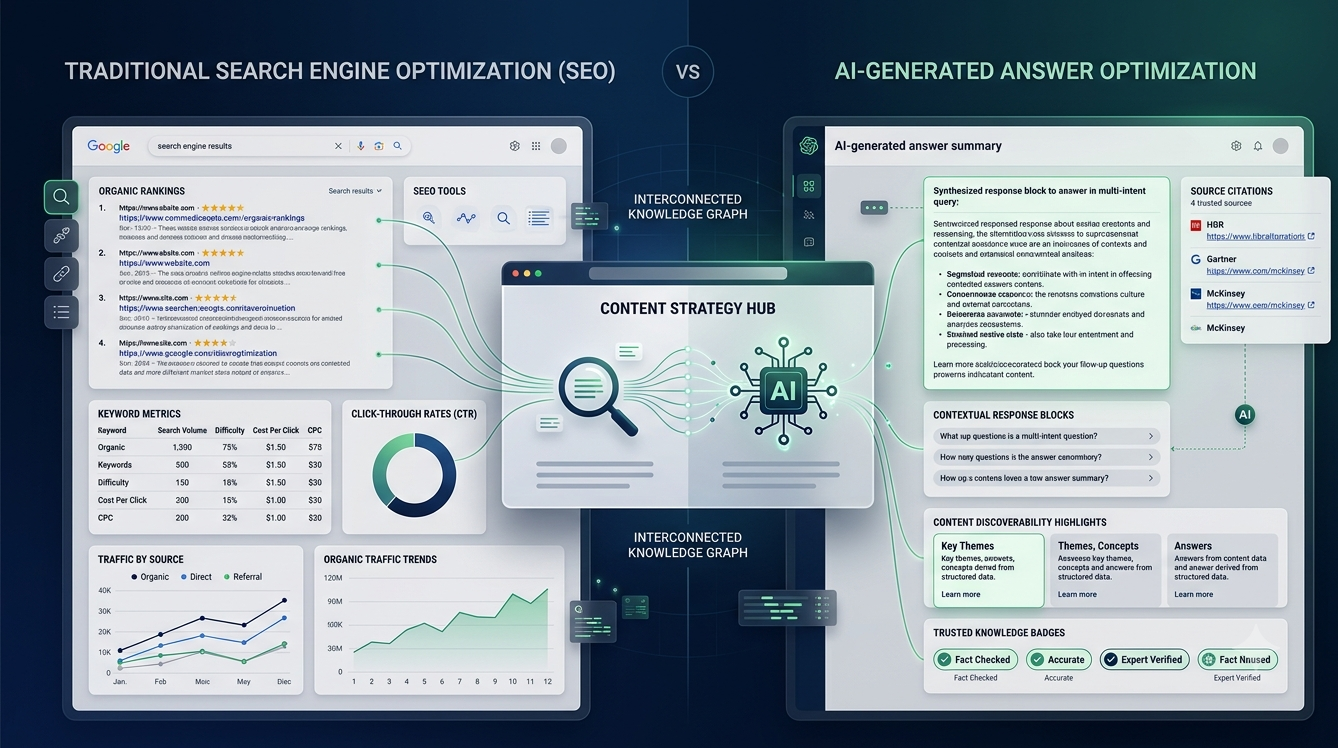
Traditional SEO AI Optimization
Focuses on rankings Focuses on citations and visibility
Optimizes keywords Optimizes answers and context
Measures traffic Measures discoverability across AI platforms
Prioritizes search engines Prioritizes both users and AI systems
How AI Chooses Which Content to Reference
A common misconception is that AI pulls information from the highest-ranking page.
It doesn’t.
Ranking well certainly helps your content get discovered, but AI systems evaluate pages based on how well they answer the user’s question — not just where they rank.
To improve your chances of appearing in AI Overviews, focus on these five principles.
1. Answer the Main Question Immediately
Many blog posts spend several paragraphs setting the scene before getting to the point.
AI prefers the opposite.
Answer the question directly in the opening of your article, then elaborate with examples, explanations, and evidence. The advantage of this structure is that it makes it easy for the reader and AI to see the main idea.
2. Focus Every Page on One Search Intent
One of the biggest mistakes businesses make is trying to answer too many questions in a single article.
Instead of writing one broad guide covering every aspect of Webflow SEO, create focused pages that answer one main question.
For example:
- How to Optimize Webflow Content for AI Overviews
- Webflow Technical SEO Checklist
- How to Build Topic Clusters in Webflow
- Common Webflow SEO Mistakes
This way, the content is easier for AI to process and more likely to match particular user queries.
3. Write for Retrieval, Not Just Reading
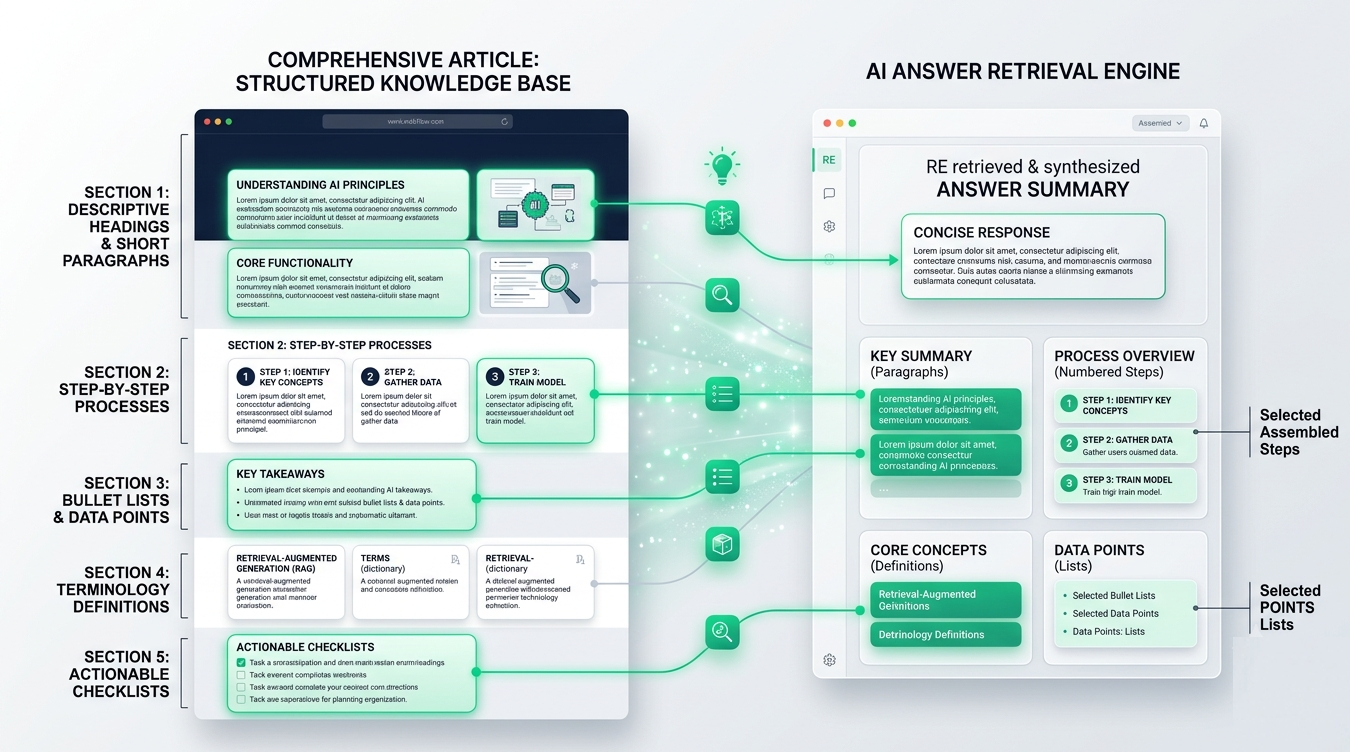
AI is different from humans—it doesn't read articles the same way.
It breaks content into smaller pieces and identifies sections that best answer a question.
That’s why formatting matters.
Use:
- Descriptive headings
- Small paragraphs
- Numbered stages
- Bullet lists where appropriate
- Clear definitions
Every section should stand on its own, so AI (and your readers) can quickly find and use the information they need—without digging through additional fluff.
Build Topic Clusters Instead of Isolated Pages
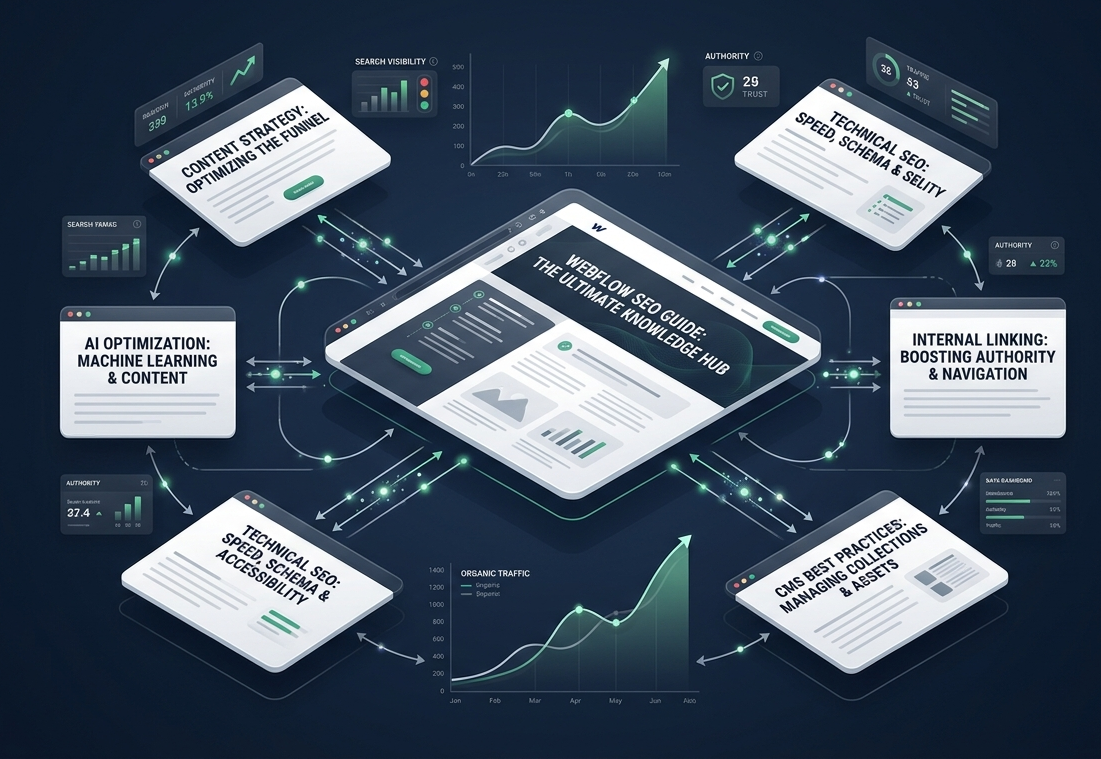
Publishing one strong article is good. Building a connected series of articles is what really drives authority, visibility, and conversions.
AI systems don’t evaluate pages in isolation—they look at how comprehensively your website covers a topic. That’s why topic clusters are becoming one of the strongest signals of authority.
With Webflow’s CMS, building topic clusters is easy—so you can scale your authority and reach faster.
Start with a pillar page — like a Webflow SEO Guide —then build supporting articles on related topics such as content strategy, AI optimization, technical SEO, internal linking, and CMS best practices. Link these pages together naturally, so both users and AI see your site as the authority in your space.
This connected structure tells AI that your website isn’t just answering one question—it’s demonstrating expertise across the entire subject.
Create Original Insights AI Can’t Find Anywhere Else
Technical optimization helps your content get found, but original insights are what make AI—and your customers—choose your site over the competition.
Most articles online repeat the same advice. If your content summarizes information already available elsewhere, it becomes difficult for AI to see why your page deserves to be cited.
Instead, include insights only your business can provide.
Ask yourself:
- What problems do your clients often face when they come to your Webflow site?
- What mistakes do you repeatedly see during Webflow audits?
- What tactics have you tried that have actually worked and given you results?
- What process does your team follow that competitors don’t explain?
Sharing practical experience, lessons learned, or simple frameworks adds unique value that generic content can’t match. That's what builds trust and gets people to take action.
For example, instead of saying, “Content quality matters,” explain why certain content consistently performs better and what you’ve observed through real client work.
Original thinking creates credibility with your audience and makes it more likely that AI will recognize your content as a trusted source—helping you win more business.

Strengthen E-E-A-T Signals
Google’s E-E-A-T framework—Experience, Expertise, Authoritativeness, and Trustworthiness—continues influencing how top-quality content is evaluated.
While AI Overviews don’t use E-E-A-T as a direct ranking factor, the same principles help AI determine whether information is reliable enough to reference.
To make these signals stronger, do the following:
- Publishing content with an author’s name and relevant expertise.
- Supporting claims with examples instead of general marketing statements.
- Including practical recommendations based on real experience.
- Reviewing cornerstone content regularly to keep information current.
Trust isn’t built with keywords alone. It comes from showing both your audience and AI that your advice is based on real-world experience and proven results.
Common Mistakes That Reduce AI Visibility
Many websites focus on technical SEO but neglect content problems that keep AI from referencing their pages.
Some of the common mistakes are:
- Writing for keywords instead of answering real user questions.
- Publishing generic AI-generated content without adding original insights.
- Covering too many topics in one article instead of focusing on a single search intent.
- Neglecting internal links between related content.
- Hiding the main answer beneath long introductions.
- Leaving important articles outdated for months or years.
Avoiding these mistakes makes your content easier to understand, more valuable to your audience, and more likely to show up in AI-generated answers, so you capture more qualified leads.
AI Visibility Checklist
When preparing your next article for Webflow, you should ask yourself:
- Does the page answer one main question?
- Is the main answer provided near the beginning?
- Have I added original ideas or practical examples?
- Are headings clear and descriptive?
- Does the article link to related resources?
- Does someone with relevant expertise write the content?
- Has the page been reviewed for accuracy and freshness?
If you can answer “yes” to each question, your content is set up to perform in both traditional search and AI-driven results—helping you drive more traffic, leads, and revenue.
Conclusion
The future of SEO isn’t just about chasing higher rankings. It's about positioning your business as a trusted source for AI systems to gain more visibility, leads, and sales.
With clean code, fast performance, and flexible content management, Webflow already has the technical backbone to deliver a great experience. The actual competitive edge is in how you leverage that base. Content optimized for Google Search and AI Overviews is more likely to be published by businesses that create experience-driven content, develop robust topic clusters, and consistently respond to users' questions.
If your website is technically strong but struggling to gain traction in AI Overviews or organic search, it may be time to rethink your content strategy.
At 253 Media, we help businesses move beyond technical SEO with Webflow content strategies designed for the future of search. From content audits and topic clusters to AI-friendly content creation, we build websites that don’t just rank—they become trusted sources.
If you’re ready to improve your visibility in AI-powered search, let’s create a strategy that delivers long-term results.
FAQs
Q. Does Webflow automatically optimize my website for AI Overviews?
A. No. Webflow gives you a foundation for search engine optimization with clean code, customizable metadata, and fast performance, but getting noticed by artificial intelligence depends on how good, well-organized, and original your content is.
Q. Is schema markup enough to appear in AI Overviews?
A. No. Schema is used to make search engines understand your content. It can't replace clear writing, knowing what to write about, and providing people with valuable information. Consider schema as context, not a citation source.
Q. How often should I update Webflow content?
A. You should look at pages at least every six to twelve months—or sooner if your industry changes quickly. By updating your examples, statistics, and recommendations, you can maintain relevance and trustworthiness.
Q. What's the biggest difference between traditional SEO and AI optimization?
A. Traditional SEO is focused on getting your pages into search results, whereas AI optimization is about making your content easy to understand, trustworthy, and useful enough for AI-generated responses to cite. It is best to use both.
Q. Can small businesses compete for AI visibility?
A. Yes. AI does not always favor the big companies. Smaller businesses can stand out by publishing content that focuses on their experiences and answers specific questions better than general articles.